Monday, October 14, 2013

The kingdom of the Thunder Dragon: [Day 2]


 "We have to take courses and pass the exam to become a guide. But I am not stick to one company, I am a freelancer!" 

The day before our trek, we visited the Tiger's Nest. The monastery is really high in the mountains so it was more like a training for us.

the hiking path to the Tiger's Nest

As we were climbing up, our guide was telling us stories (I always feel skeptical when the unavoidable legends time comes but sometimes, when you're in the kinda "ah, let the guy talk" mood, it may be funny to hear them; that was that time) about the founder of the monastery. It turned out that some Guru guy came to Bhutan in the 7th century and felt that something was wrong with the place. Soon, he understood that people there didn't hear a word about Buddhism. And that helped him to realize that the town was full of the evil forces and so it was time to set things straight. 

"Did he forced people to convert to Buddhism?"
"No no, he just showed them the way.. And  subdued those who didn't like it."
"Oh."
"Every monk should visit it once in a lifetime to purify from sins because it's the holiest place, but I'm a guide so I have a great chance to visit it from time to time."

Well, I think, the Guru succeeded in his mission only because he could ride a flying tiger. Oh, wait a minute..


After we reached the Tiger's Nest, we found out that it was recently burnt down (the monks decided to lit up as many candles as possible to praise Buddha properly), so it had to be rebuilt (hi there, "cultural heritage preservation").

"Has Dalai Lama ever been to your country?"
"No. We are surrounded by China and aren't able to give him enough safety, enough guardianship to protect him from them. So, it's impossible for him to come."

we are close..

even closer..

whoa we're so close!

As it happened to be the time for the daily "let's sulk on Boyfriend", and the road turned so steeply down just before the temple, I got SO EMOTIONAL and even started to weep. But things got better when  we finally reached the temple. It looked very beautiful after all.


The next morning we were ready to start our trek.

P.S. Aww look at these baby stupas

Monday, October 7, 2013

The kingdom of the Thunder Dragon: [Day1]


Before starting our 2-weeks trekking we had two days in Paro where we visited the central street and a couple of shrines higher in the mountains. In the morning we arrived there by the "Royal airlines of Bhutan" (not to mention, they're the ONLY airlines that are allowed to fly to Bhutan).


the airport was small but looked very authentic

when landing, pilot have to navigate the plane
really low between the cliffs which I found
both scary and breathtaking

The first thing we noticed waiting in the queue for the passport control was a poster that talked about the gross national product but using the word "happiness" instead of "product" (later I read that Bhutan was rated the happiest country in Asia).

We tried to ask our guide Karma about it.

"What does it mean "Gross national happiness"?"
"Yeah, there are 4 pillars: good governance, economics development, cultural heritage and national environment. We have questionnaires which ask people "Are you happy?", "Are you satisfied?".."
"So, are you that happy?"
"Yes, in general. There is no torture, everybody is equal. Peace, no external disturbance, no corruption. Everybody gets safety and clear water.."
"But no electricity"
"Yeah."
"And not everyone have to pay taxes."
"Yeah, if you earn less than 100 000 ngultrums in a year and you don't need to pay any taxes."

tea momo egg roll juma fried rice boiled egg koka

Actually, people with income over 100K are usually government workers. The government worker pays taxes and at the same time collect them. That doesn't make much sense, so the main income is still tourism, I guess. But that is not the only reason why it's so difficult and so expensive to get to Bhutan. According to our guide, people there just scared. The King is afraid of the situation in which there will be more foreigners than the natives in the country. And especially Chinese communists who will apparently destroy all the national culture like they did in Tibet.

"We have three open boarders with India but none with China. Regardless their constant requests, we say "no" because we don't want to lose our friendship with India."
"Are you afraid of a possibility of war with China?"
"Not really. We have India, it'll make them angry."

Actually, there is an official agreement between India and Bhutan against close relationships with China.

The second thing we noticed, was another poster that prohibited to export the antiques from the country. The excuse was that they were preserving the national heritage. However, I started to notice things which didn't come along with that statement. 

the superb lobby of our hotel in Paro. wood carving, paint.


Wiki says that most of the historic records were destroyed by fire in 1827 (but even if there was no a fire, the centralized country started to exist only in 17 century anyway). Moreover, wherever we went, we were told that there were several big earthquakes recently which destroyed like everything. Again. So, almost all the buildings we've been to were just restored copies in one way or another.

a view to the valley from the window of the hotel room

Also, we didn't find any antiques and it was difficult to find any traditional crafts in Paro. No goods even from the wool of Yak (we didn't even bring any sweaters with us)! The variety of local food was pretty poor, and I noticed that the imported junk food was in higher demand. We then saw how locals in the mountains were eating cup ramen, biscuits and other foreign sweets. However, there are two things produced by Bhutanese which are really valued among the natives and they are chili and koka. We saw many chilies drying under the sun on top the roofs and a lot of men with their mouths red from koka (the guide said, that Buddhism doesn't forbid drinking alcohol or eating koka).

you can see chilies in their natural habitat drying
in the sun on top of the roofs of the local shops

A chili from a chili farm blocked my way to the fortress!

That was surprising for me to know, that Indians teach them English and provide with several educational programs. The pilots are Indians too. So are the chefs. The Bhutanese don't even build the roads themselves because "they don't have the necessary skill level" in Bhutan! It's Indians who construct the roads for them. And his majesty doesn't really want to analyze the situation since it's easier for him just to hire the good foreign workers from India.

We're entering the Rinpung Dzong(=fortress) area


"We don't want democracy, we want the king. The king is not really a god for us but we worship him, and he trusts on his citizens in return. There is no opposition also as people there don't want any."

The funny fact is that in 2008 the democrats lost the elections in 2005 taking 2 out of 47 seats in the parliament.

then, we wandered around the main street (actually, it was the only street in town)and returned to our hotel where   we   spent  the  rest  of  the   day   online.


Saturday, October 5, 2013

The Village of the wild plum


Interesting stuff about the translation of the original name of Bangkok.

The elections in Moscow have come to an end (pretty depressing and suspicious end), so we packed up to head to Bhutan without feeling that we did something wrong.


On our way to Paro (the only town that has an international airport in the whole of Bhutan) we had a transit stop in Bangkok where we spent almost a day and had an opportunity to visit some shrines in the centre of the city.


We chose to go to the Wat Phra Kaew (Temple of the Emerald Buddha) because it was one of the famous and most attractive places in Bangkok according to Boyfriend.

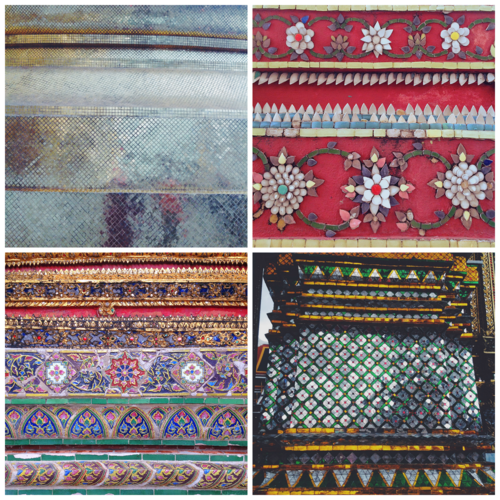
It really was. As we got there, Boyfriend started to contemplate why the shrine complexes of Bangkok aren't really famous around the world, "it's not even protected by UNESCO". But soon, we started to notice the modern marble slabs at the temple's bases, the workers were painting the ceilings gold using paper stencils, and the modern glasses from the shrine's walls were falling off (the production of the original glasses was over in the last century). I read about the reconstructions of the complex: there were four restorations; the last one was like thirty years ago. Now I think that's the reason UNESCO don't want them. 


But the complex looked awesome anyway. It goes to show that even in the poor countries people are capable to follow architectural traditions.


When we came to another big shrine and took off our shoes leaving them before the enter, it started to rain so heavily (oh hi there the monsoon season!) that the downpour didn't stop for another hour or more.


For 5 minutes we were exploring the temple but then got bored and started to think over the escape plan. Why not to run out of this dry and warm place in a random direction without any idea where the exit is.


When we already were all thoroughly soaked, Boyfriend remembered that we actually had a map with us. So, after he studied it for some time, a brilliant idea came to his mind. "There!" he said and we were again running under the rainfall to the direction he chose. When we finally got under the roof, a guard man appeared just before us and with the words "NO EXIT" pointed to the just opposite direction. 

I already prepared a speech to deliver which should've started with "GIVE ME DAD MAP, YOU!" but then I remembered that that was a Boyfriend and Boyfriend is inviolable, so we just silently headed to the new direction.


The complex was 45 minutes away from the airport by car but it took us more than 2 hours to get back as we stuck in a huge traffic jam. I later read that the traffic problem is one of the things Bangkok is famous for. And that's funny because according to wiki
Bangkok is the seat of all branches of the national governmentTheGovernmentHouseParliamentHouse and Supreme, Administrative and Constitutional Courts are all located within the city. Bangkok is the site of the Grand Palace and Chitralada Villa, respectively the official and de facto residence of the king. Most government ministries also have headquarters and offices in the capital.
Frankly speaking, the one good thing they've done is the system of intersection bypasses and elevated highways. But it's built almost on the outskirts of the city and it doesn't solve the problem in the centre anyhow.


So what is the occupation of the king? Well, actually, I heard about a couple of the obligations of his majesty. Like to give the different types of orders..
On May 2010 there was a demonstration which ended with 92 deaths of armed and unarmed protesters and journalists.
And these kinds of things..
Only the Thai King is allowed to touch the statue of the Emerald Buddha. The King changes the cloak around the statue three times a year, corresponding to the summer, winter, and rainy seasons, an important ritual performed to usher good fortune to the country during each season.
"To usher good fortune to the country" because you must do this stuff somehow.


P. S. Airport photos!

3 am and "Goood moorning!"
from my backpack-kitten
cute-looking Thai coke

cute-looking milk which I didn't buy 

because I don't like milk

but I really like these tiny bottles >_<
cute-looking sunrise

and a cute-looking plastic capsule of water.

Thursday, September 12, 2013

InLiberty 2013

Me and my new libertarian friend!

We are back in Moscow from Georgia where we spent a week listening to (pro-libertarian) lectures on economics and learning how to debate. The summer course was held in a former military base, 40 minutes driving distance from any civilization. One of my first tweets when we entered the building was like "We already arrived and THERE IS NOTHING BUT COFFEE IN THIS PLACE". Although, later that evening we had our dinner, all in all this photo shows how I saw the food situation:

THE LAST PLUUUM!!

I even recall how I wandered along the road to pick some wild apples for lunch.


The conditions were pretty tough but we've got what we came for. We met Kaha Bendukidze (the former Head of the Government Chancellery of Tbilisi), had lunch with Jason Sorens (the founder of the Free State Project), slept during the  really interesting lectures by Anrey Illarionov (the former economic policy advisor to the Vladimir Putin) and listened to the many more libertarians! How could it be possible that we lived with them in the same small building the entire week eating together and singing songs after midnight with some of them?

The economists (Butrin on the left and Illarionov on the right)
are arguing desperately about politics.
Every day started at 8:30 am with attempts to take a shower (which was actually attached to the toilet room's ceiling) and pray for eatable porridge for breakfast or at least some whole-grain bread. The first lecture started at 9:30 and the last one ended after midnight, when half of students went sleep while the other half with some lecturers moved to the backyard to talk informally until 3 am.

9:40 am. Trying to concentrate on economics.

As I already mentioned, the lecturers were really great people and they raised the topics I was thrilled to hear about. They spoke about the history of liberty, the correlation of the political freedom and the economic growth, laissez-faire politics, the success of Hong Kong and the failure of Ukraine.

"KILL THE STATE WITHIN" it says (^_^)/ 

The most interesting part though, was to listen to the American lecturers. Especially, Jason Sorens as he spoke about his project in New Hampshire. The idea of his project is to recruit as much libertarians as possible to move to New Hampshire, so they could make a real difference in people's lives gaining enough votes in the senate. I knew about it before but his presentation made me feel so excited and depressed at the same time again, that I felt the urge to look at the whole thing from the inside as soon as possible.


And wow wow Tom Palmer was there too! Though, he himself raised pretty obvious topics (such as "Welfare state is evil"), apologizing for that he had to speak English (that was definitely cute), it was a great opportunity to ask his opinion on different subjects.And even though some subjects were obvious, we learned a great deal of argumentation which might not come to your mind before.

Anyway, Palmer seemed interested in the whole thing. Russians? Libertarians? Er.. wut?


As for Boyfriend, he went there more for the sake of work than the lectures, so he always looked busy when I tried to occupy myself with, like...

Sketching..

Or idling...

But still more drawing than idling. As the other members of LPR were debating, I was sketching them PASSIONATELY and with special diligence.

These guys!

I also drew Sorens! And asked Boyfriend to speak for me (because I'm too shy to speak with adults especially with such well-known guys in any language) so I could give the sketch to him. And I  we succeeded! Jason Sorens took it and patted and said he treasured it. This is how I met my new hero.

He also reacted when I mentioned this on twitter.

Another important thing was the debates time. We were divided into teams and each day we were given 3 hours to develop the arguments and prepare our speeches and questions, and than the debates began. At first, I was sitting aside and watching closely. The next day was tough for me, so I cried myself to sleep during the preparation time. The day after that, my new friend forced me (in the most libertarian way!) to participate. Early in the morning, he mentioned that I couldn't back out, so I had time to jitter and sob about that. But when the time came, with the help of our mentor and that friend I prepared a closing speech about the evils of the authoritarian reforms.

They are also speaking against unpopular reforms
(My speech was just a conclusion). Oh hi, Mao!

By the end of my speech half of my face was twitching nervously but.. people laughed as they supposed to and applauded. Somebody even whistled and came up to me after the session to cheer me up. I was relieved. Did I enjoy it after all? Yes. Did I agreed to repeat my performance on the next day? No, for the first time it was enough.

Me after the debates
The last day was the excursion day. The whole group was packed into small buses and we set off to the capital, Tbilisi, stopping at some historical sites.

When we got to Tbilisi I found the situation in the city pretty strange:
  • Modern architecture looked fine (Thanks to the president, Saakashvili)
  • The main street of the city, the Rustaveli Street, looked just awesome

  • But the rest of the capital looked really poor
  • Lots of poor people ask for a handout
  • If you turn off the main streets you'll find pretty much nothing but the dilapidated houses and backyards)


I got interested in reforms of Saakashvili and it all came together to a question "Why even though the Good beats the Evil, it doesn't last long and is pushed out by the system, because the system is already rotten?"

Our certificates of participation (^-^)v